A trip to the Yucatan peninsula is not complete without a visit to the famous Maya ruins of Chichen-Itza. In the past, Chichen Itza was the largest political and trading center in the region. Today, it is the most visited archaeological site on the Yucatan peninsula.
Read below, how to make the most out of your visit to the Unesco Cultural Heritage
Next Article: From Valladolid to Adventure: Exploring the Best of Yucatan’s Natural and Cultural Attractions
Dating back to 900 AD, the complex boasts numerous well-preserved and restored buildings constructed by both the Maya and the Toltecs. Take a closer look at the intricate details of each structure and you’ll find depictions of Chaac, the Mayan rain god, and Quetzalcoátl, the plumed serpent.
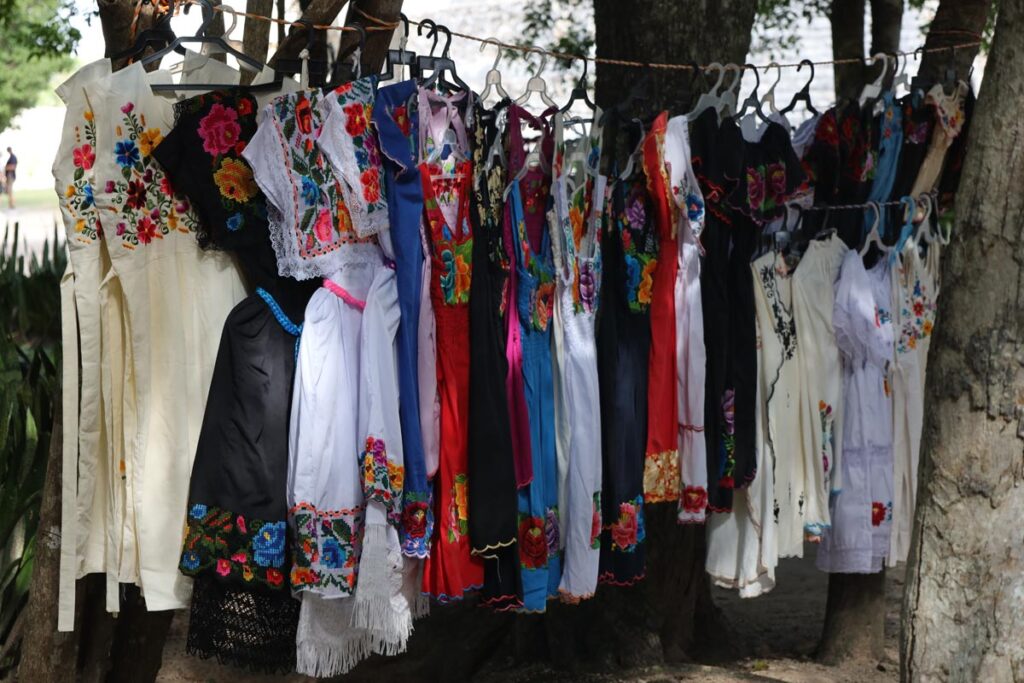
Once the crowds start pouring in, the enchanting atmosphere of the place begins to fade. To fully appreciate the site, it’s best to arrive early in the morning before the bus tours and street vendors take over the area.
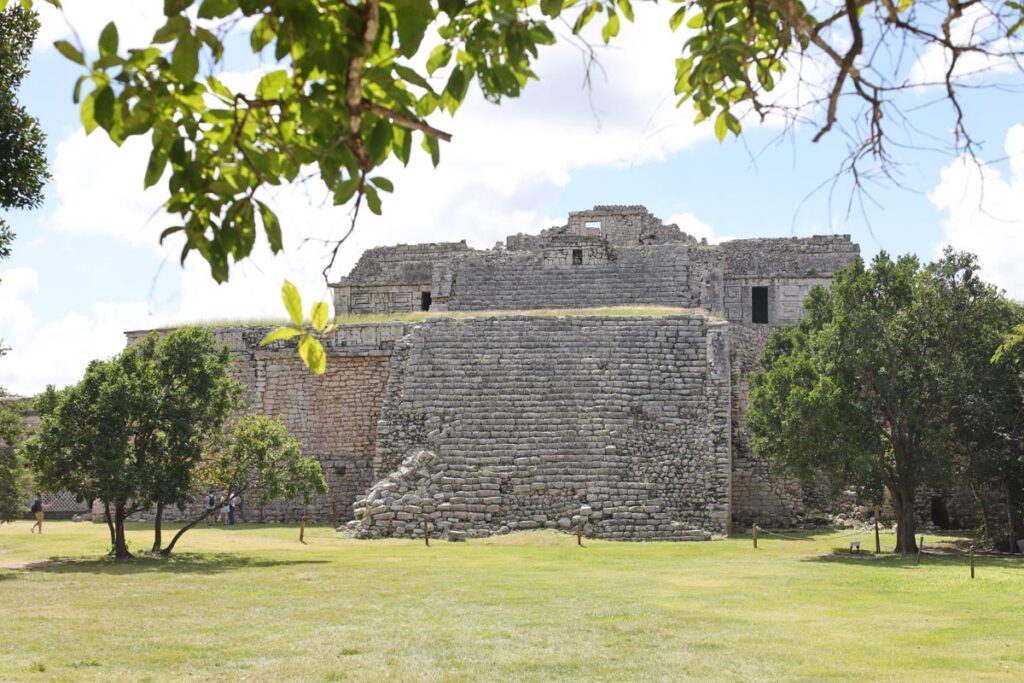
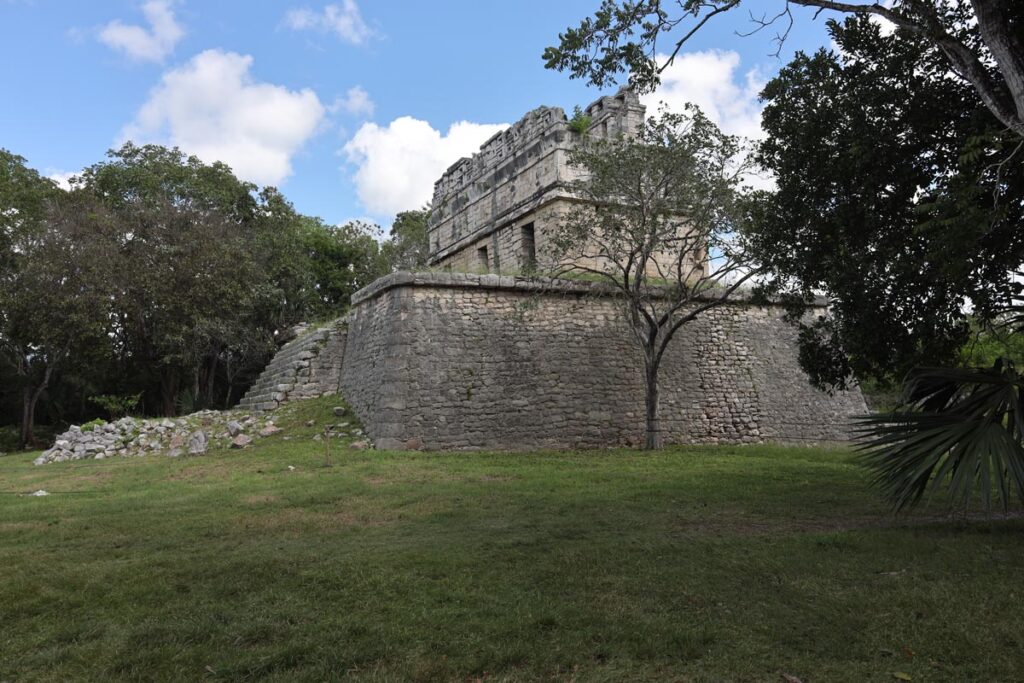
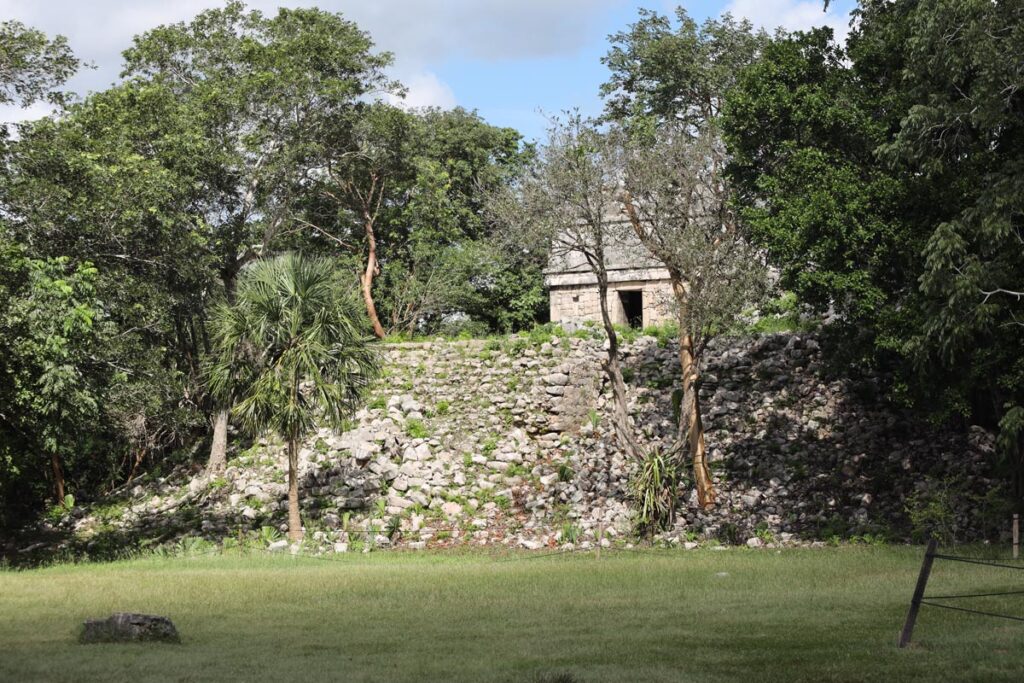
While the main attractions are centered around the iconic “El Castillo” pyramid, don’t miss out on the quieter, less frequented parts of the site on the western side of the pyramid. Exploring these areas is well worth the effort.
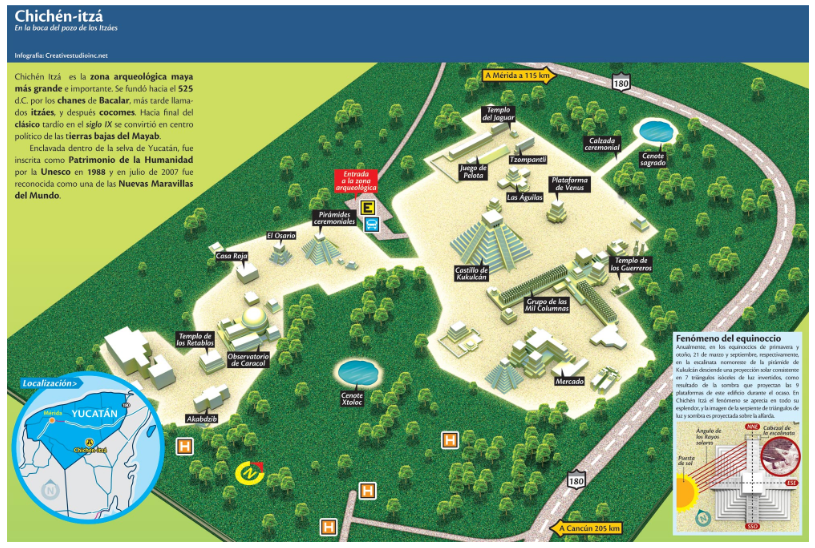
Source: chichenitza. com/maps
What to see in Chichen Itza
Castillo de Kukulcán
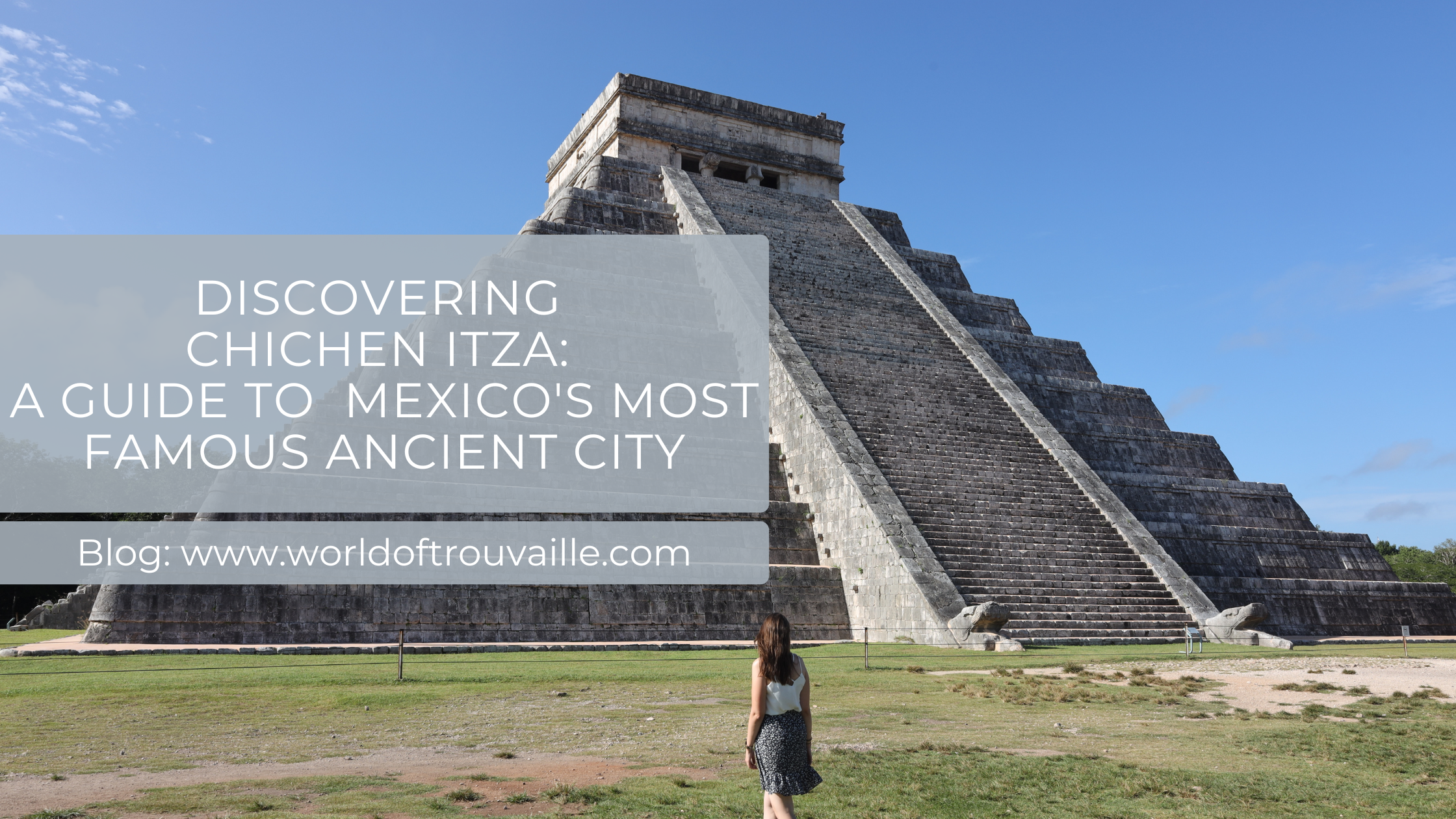
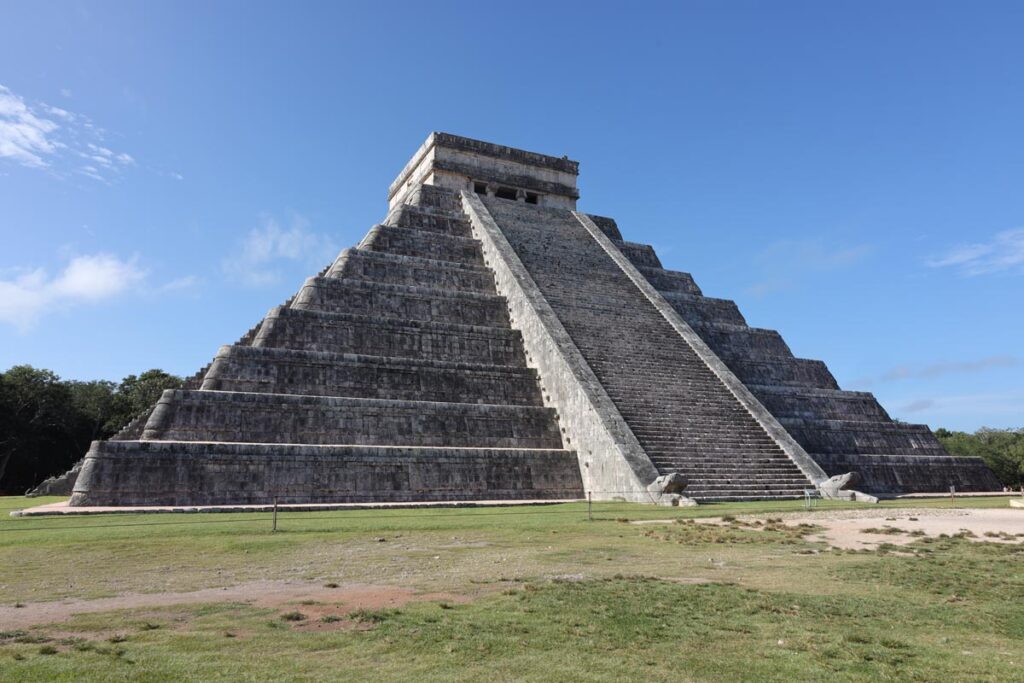
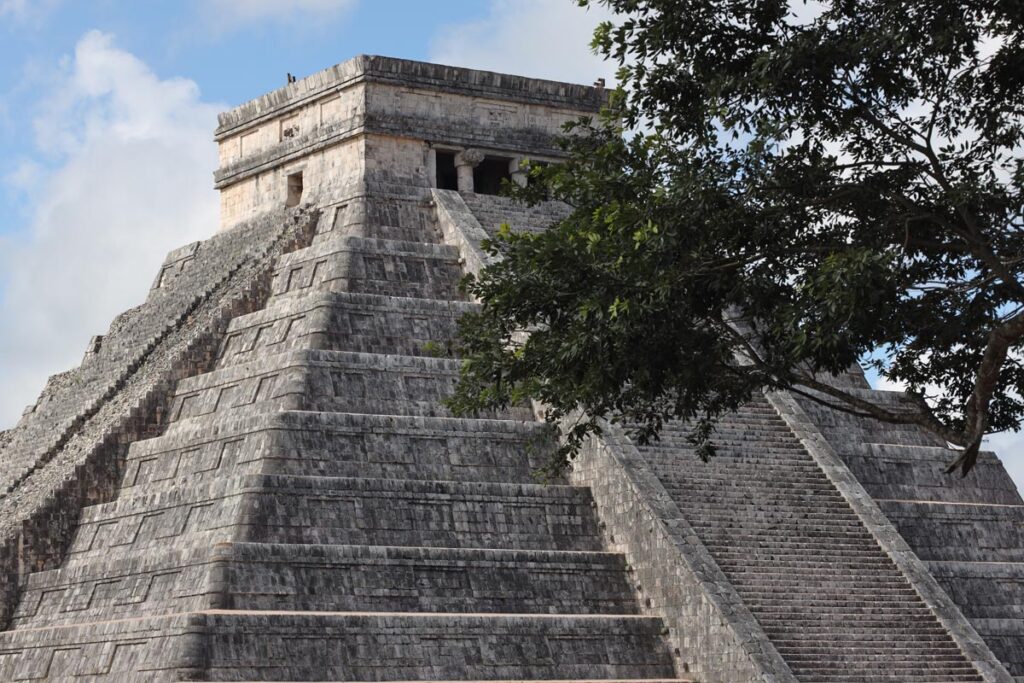
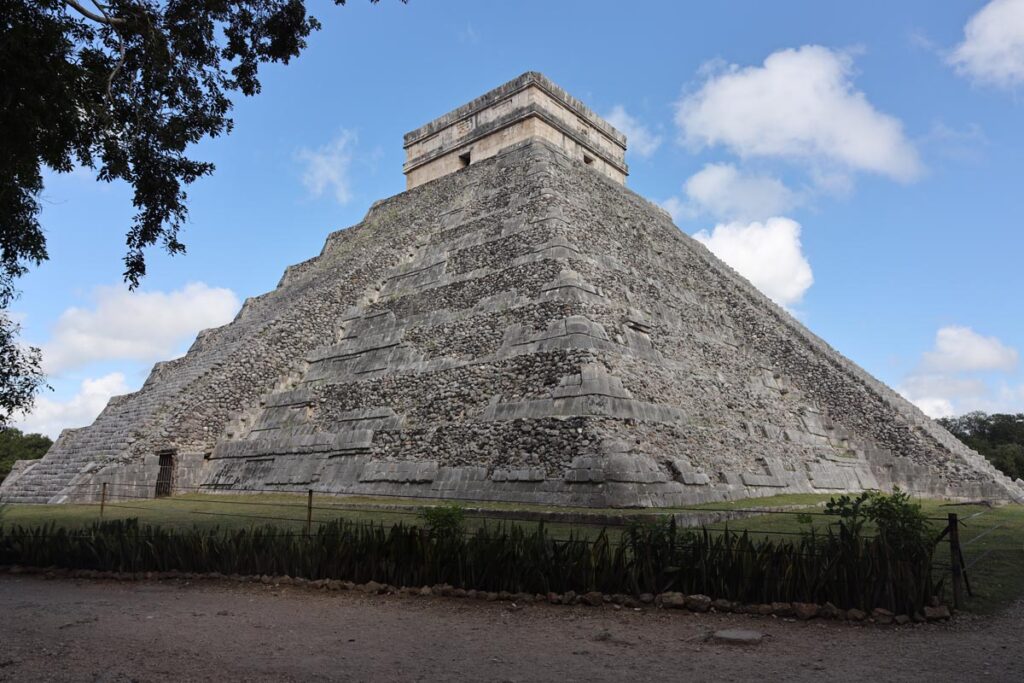
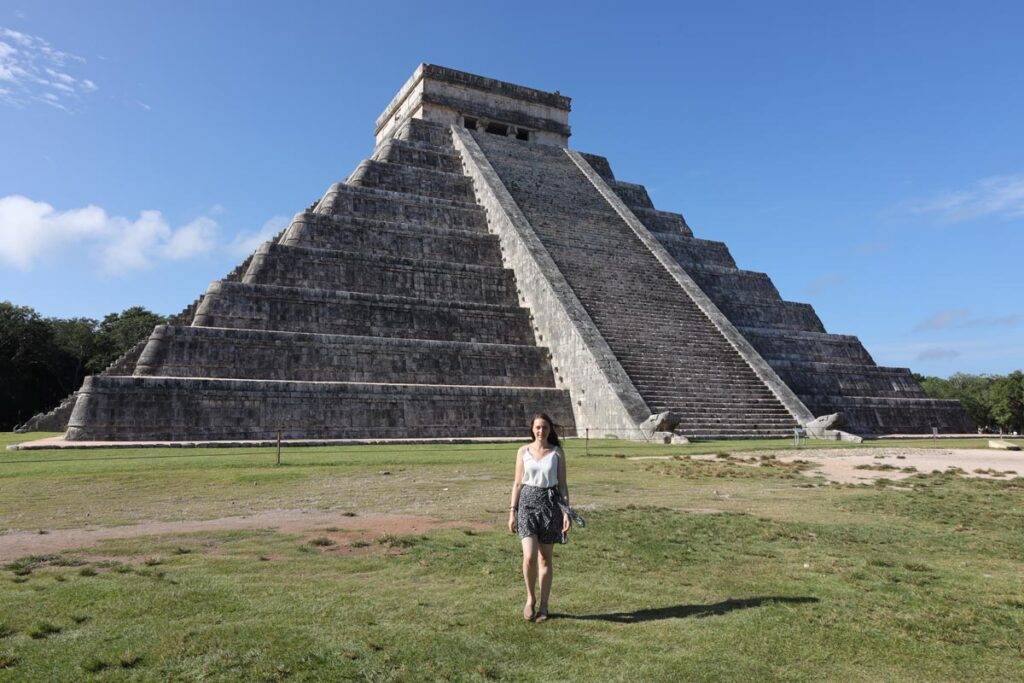
The first and most recognizable attraction at Chichen-Itza is the Castillo de Kukulcán. As soon as you enter the complex, this iconic pyramid greets you. Dominating the central plaza of the archaeological site, the step-pyramid is impossible to miss. Be sure to walk around the entire pyramid to fully appreciate its magnificence and grandeur. The best restored side is the one facing you as you approach, but walking around will also give you the opportunity to see some parts that have not been restored.
Unlike other Maya ruins, climbing the ruins of Chichen Itza is not permitted. However, this is not necessarily a drawback as it allows you to take photos of the buildings without any people on them.
Juego de Pelota
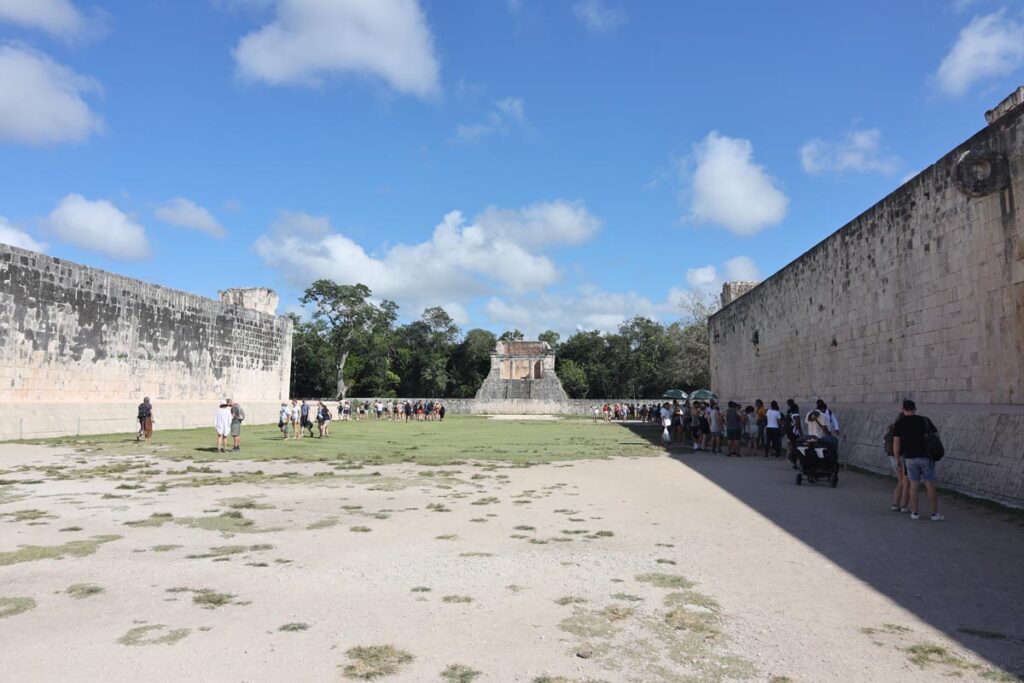
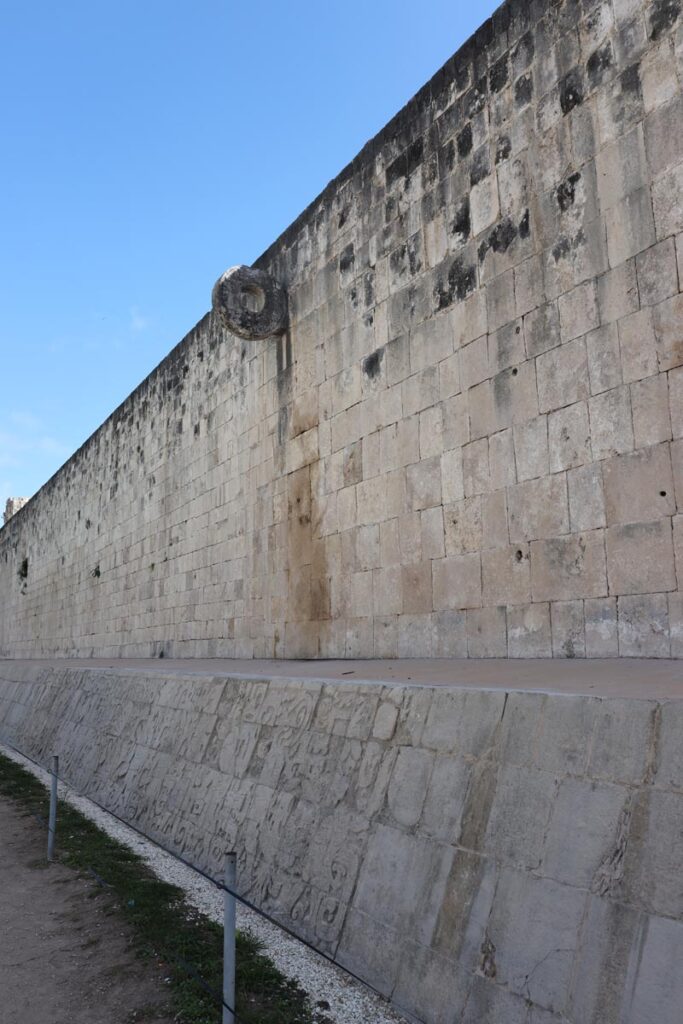
Near the Castillo de Kukulcán, you’ll find one of the most fascinating and unexpected structures: the Juego de Pelota, an ancient ballgame court. It’s the largest and most impressive ballgame court in Mexico, measuring 170 meters in length and approximately 40 meters in width. This makes it larger than a modern-day football field.
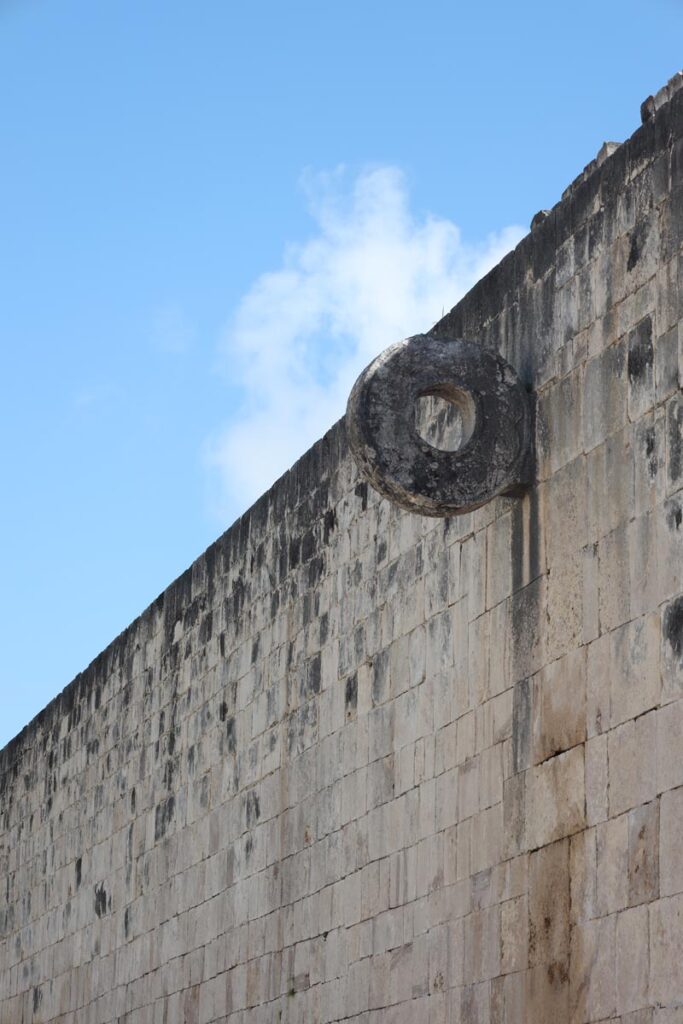
The ballgame court is enclosed by two enormous walls that can reach up to eight meters in height. At the top of each wall, you’ll see two stone rings that serve as the goals. The objective of the game played on this court was to pass a ball using any part of the body and to score by getting the ball through one of the targets mounted on top of the walls. It was certainly not an easy task!
Standing on the ballgame court and imagining what it must have been like to witness one of the ancient “football” games is an impressive experience. But the architecture of the structure offers even more interesting must-sees—or rather, must-hears. The court has a unique acoustic property: a conversation that takes place at one end of the court can be heard clearly at the other end, even if it’s just a whisper. Additionally, the sound of a single clap multiplies into loud echoes throughout the court, making it a fun place to clap your hands and listen to the echoes.
Platform of Skulls
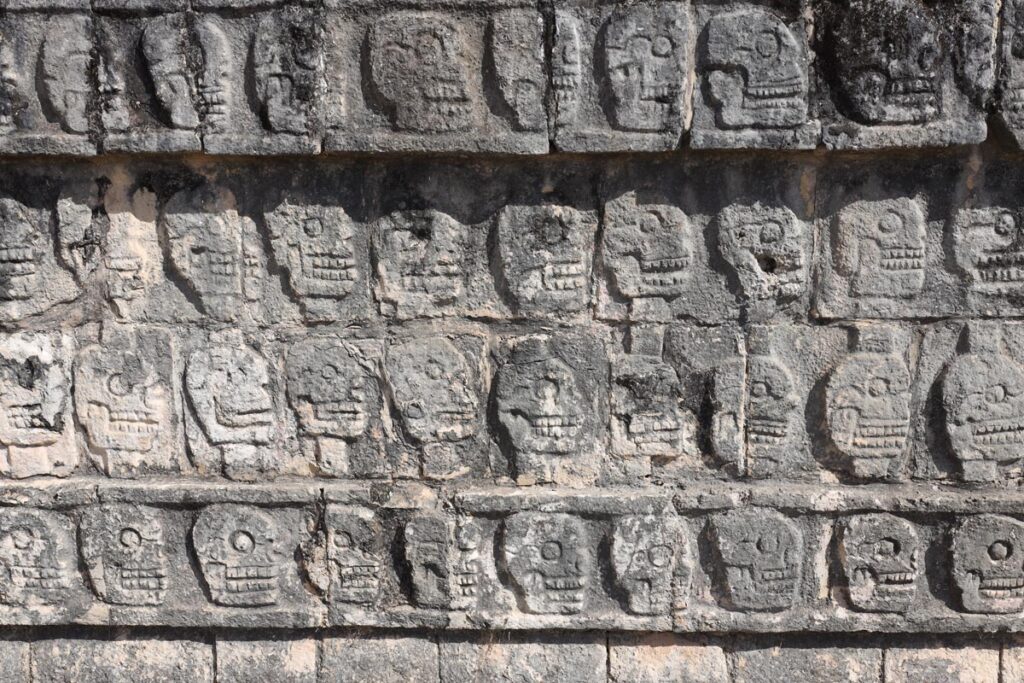
As you walk back towards the central plaza in the direction of the Castillo, you’ll come across the “Platforma de losCráneos” or Platform of Skulls. It doesn’t take much imagination to figure out the purpose of this wall in the past.
Grupo de las Mil Columnas
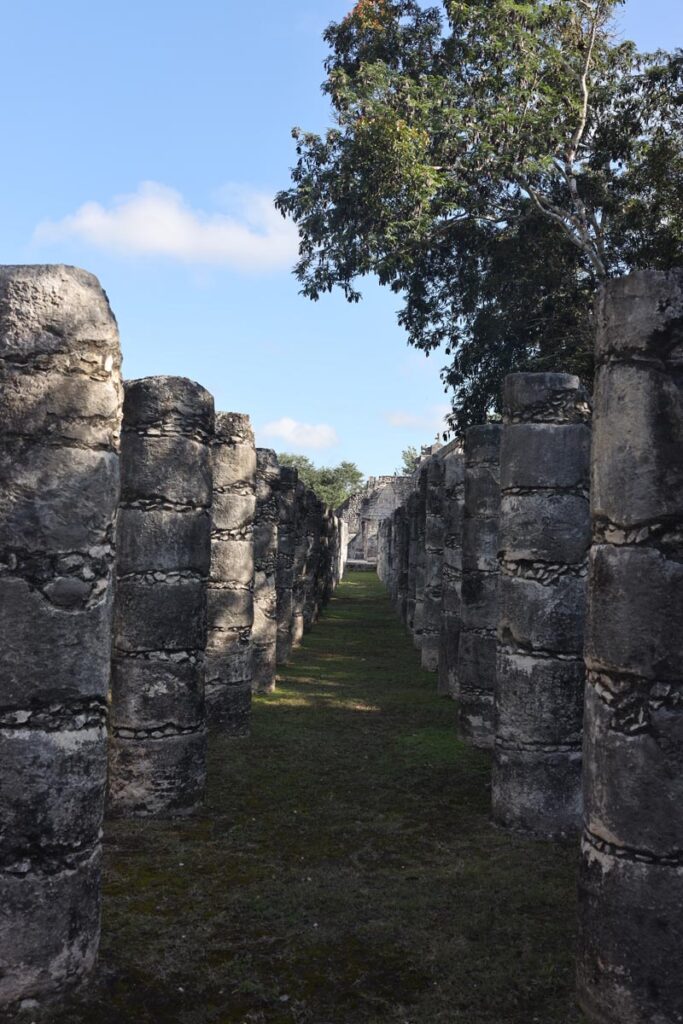
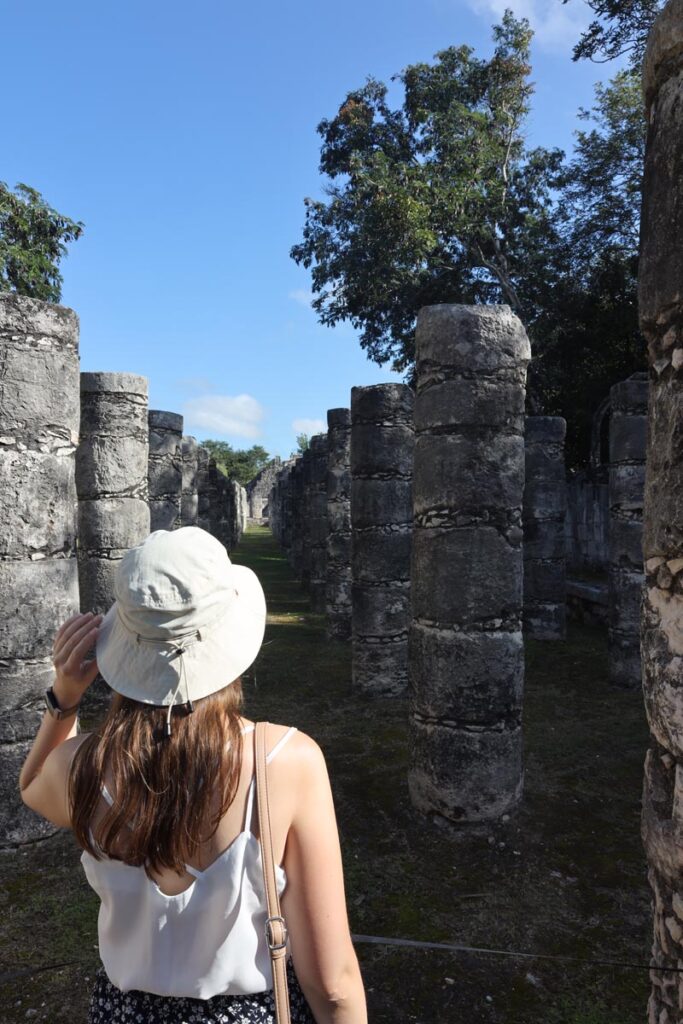
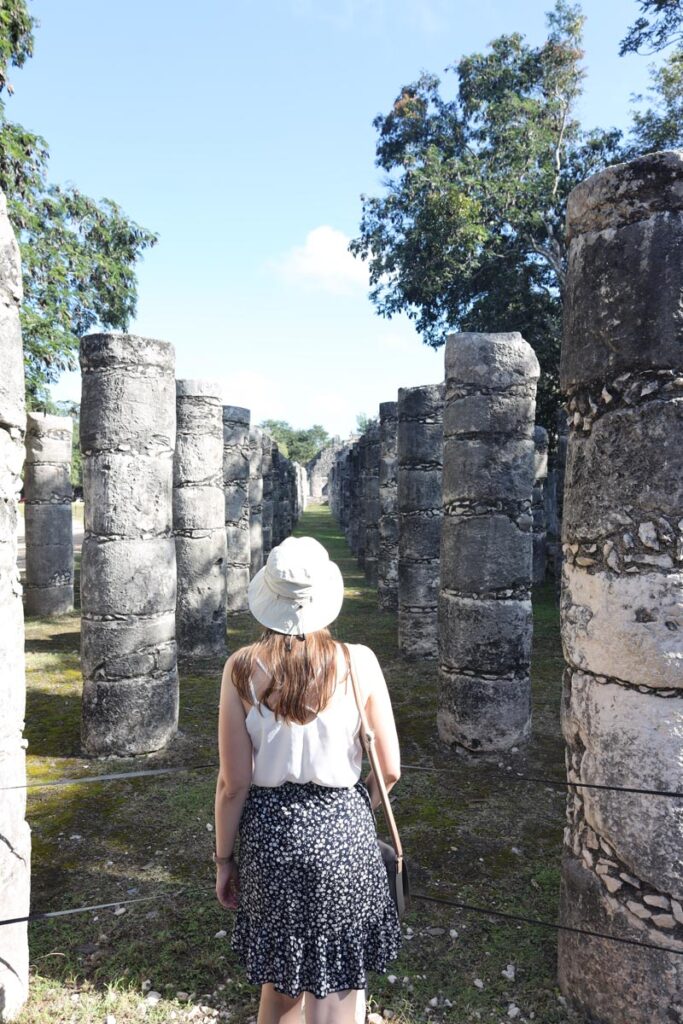
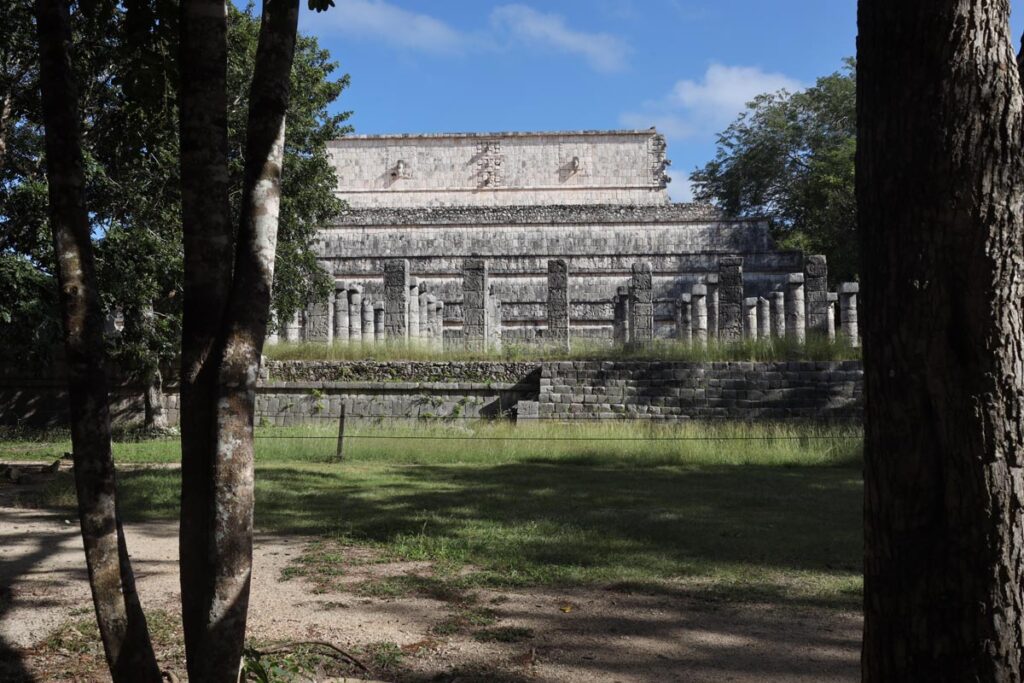
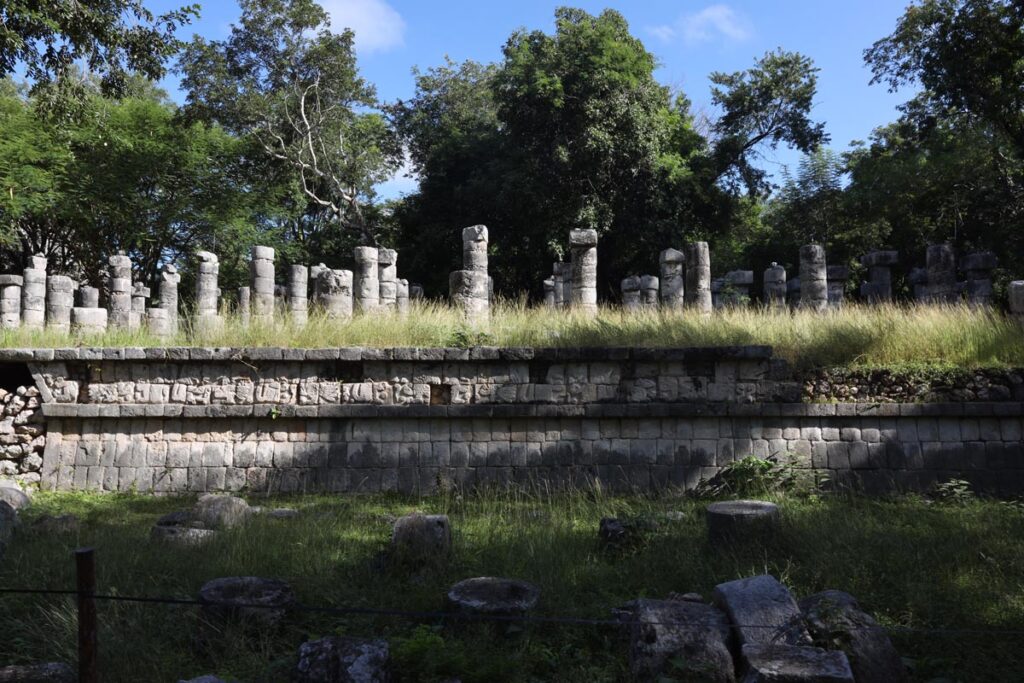
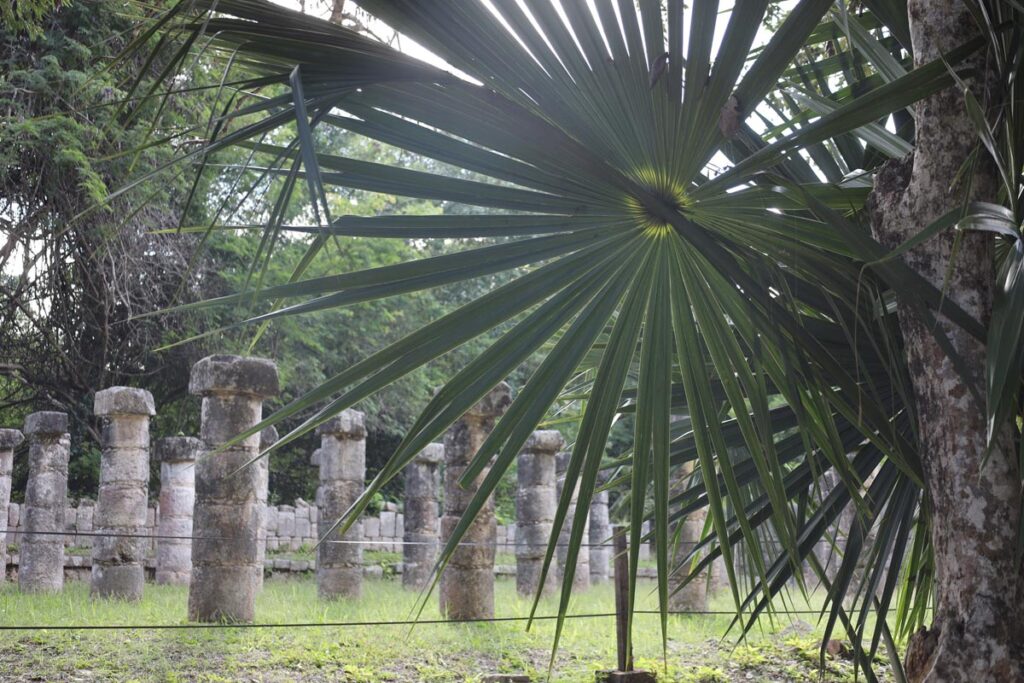
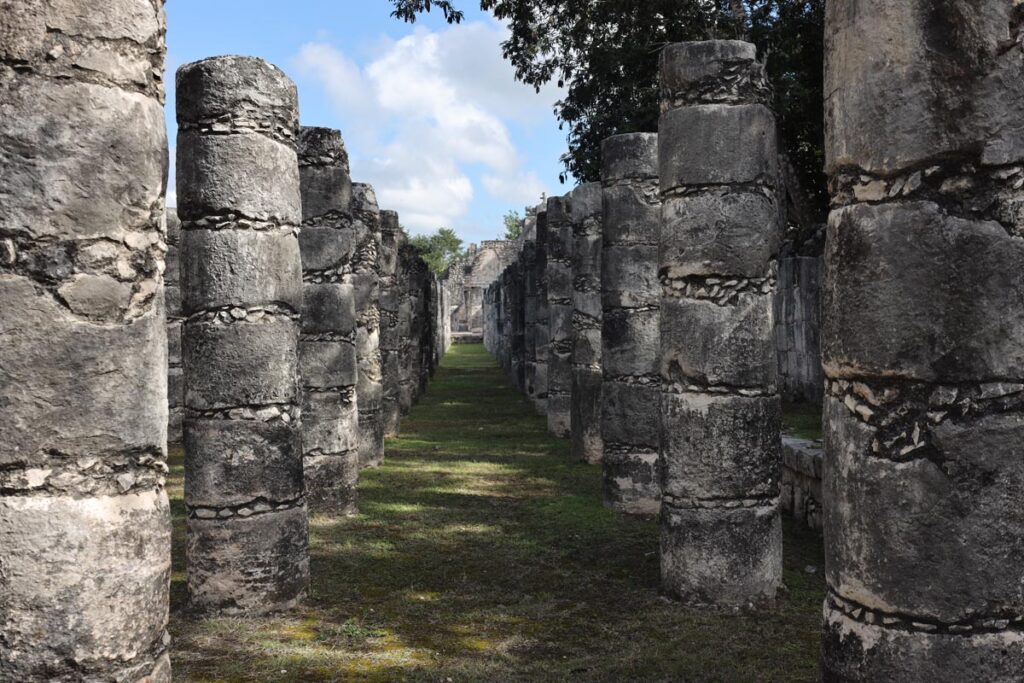
Seen from the entrance, the Grupo de las Mil Columnas(Group of thousands of columns)is locatedright behind the Castillo de Kukulcán. The columns once were carrying a roof, which vanished in the course of time. Today, only the columns are left, which makes a great photo motive.
The columns extend towards the south and east into the surrounding jungle, and the views from different angles are always stunning, never getting old.
The pyramids of the Western Plaza
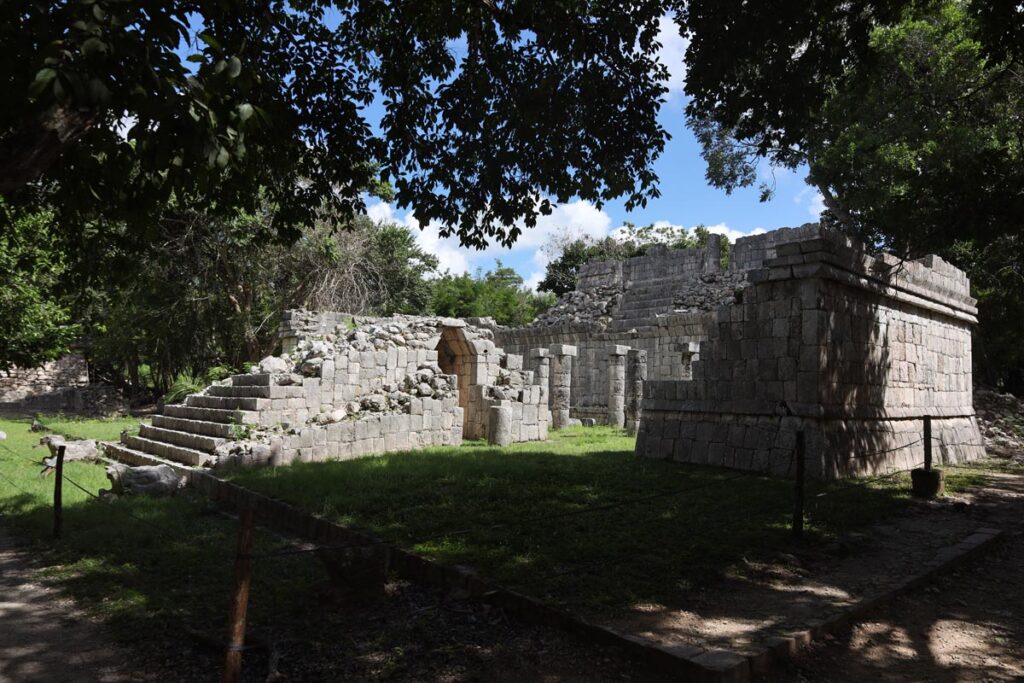
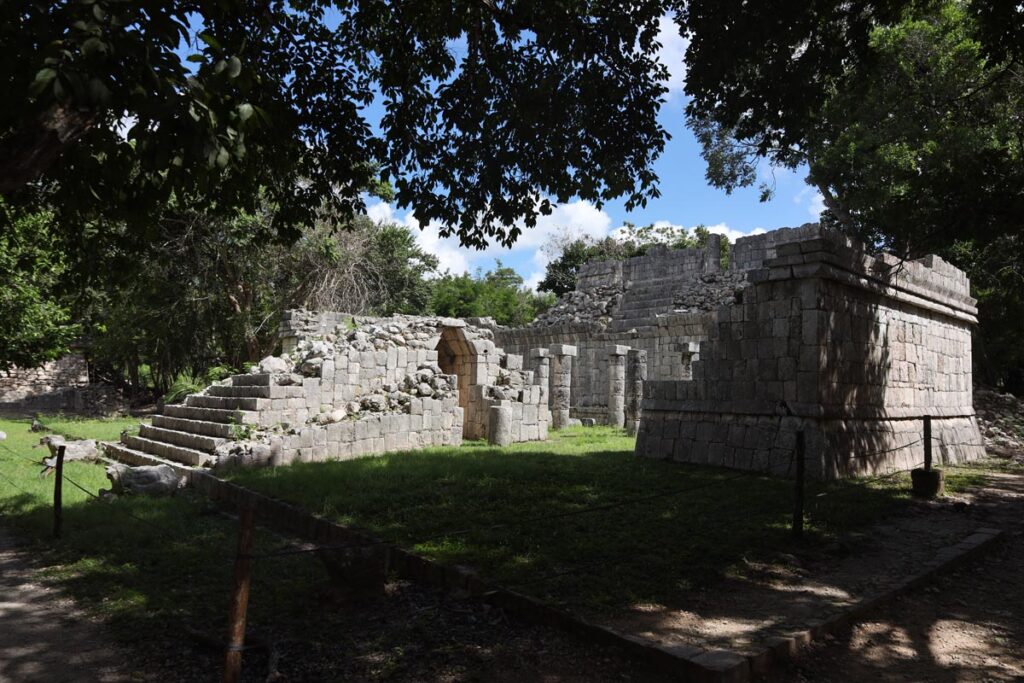
The western part of the site is sometimes overlooked by visitors, making it less crowded than other areas. The first structure you’ll come across in this area is “El Osario” or The High Priest’s Grave. It is located southwest of El Castillo and is also a pyramid-shaped ruin. The most recognizable feature of this structure are the serpent heads at the base of the staircases.
The Observatory
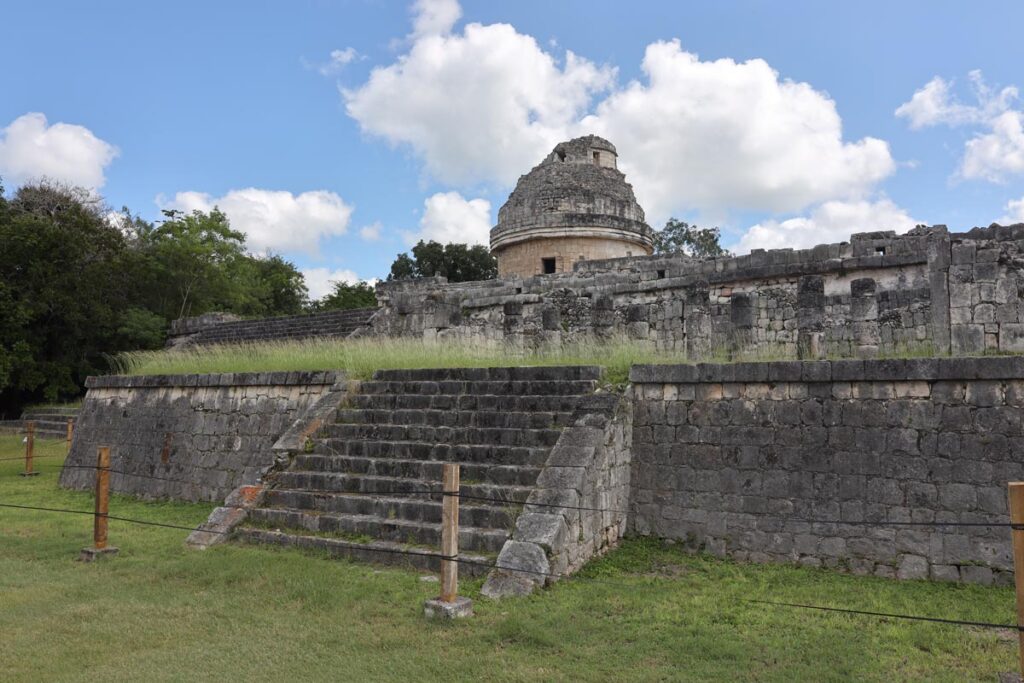
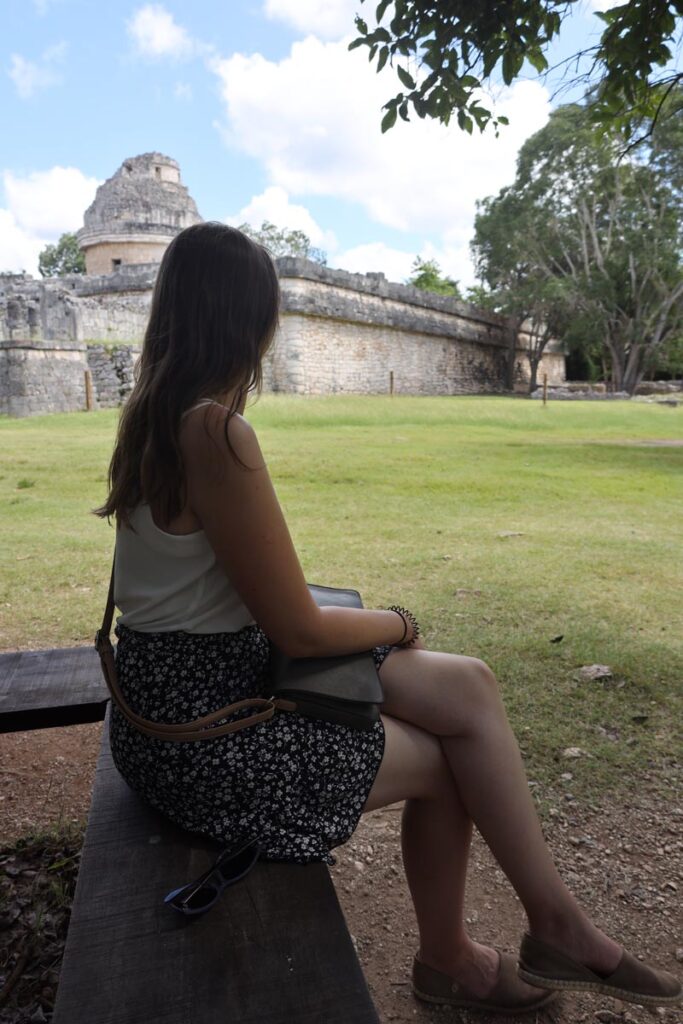
After continuing the path through the jungle, you will soon reach a green meadow.
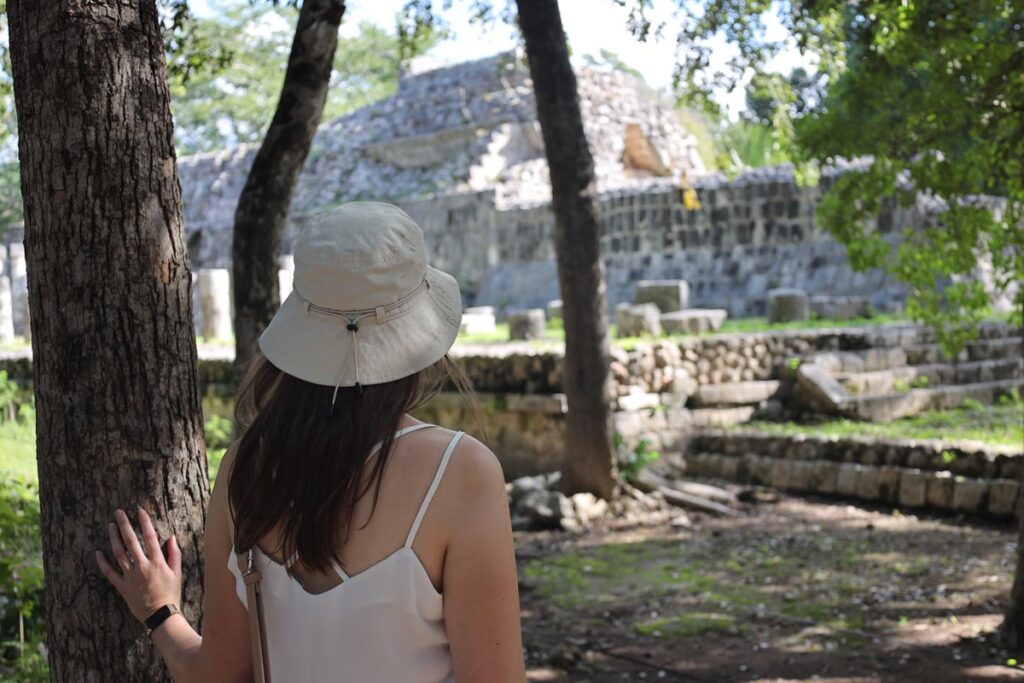
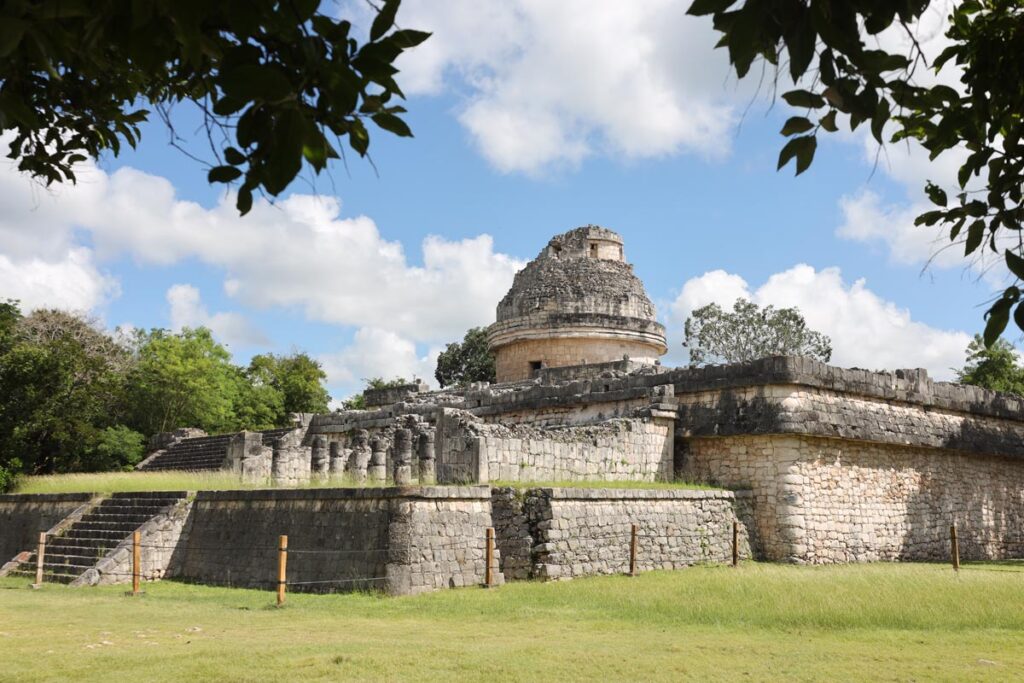
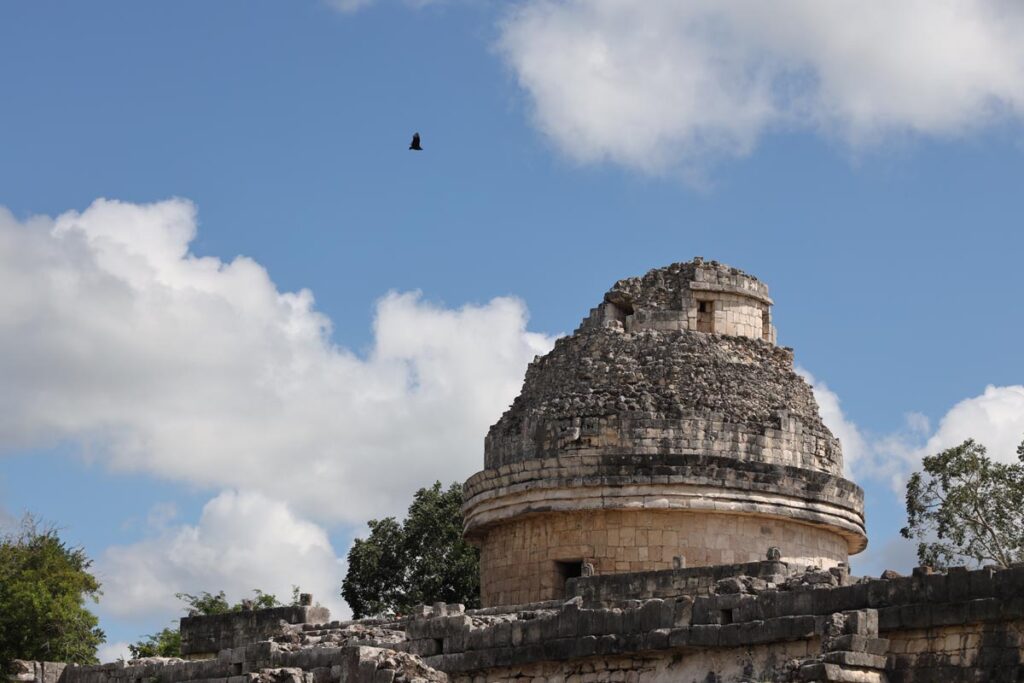
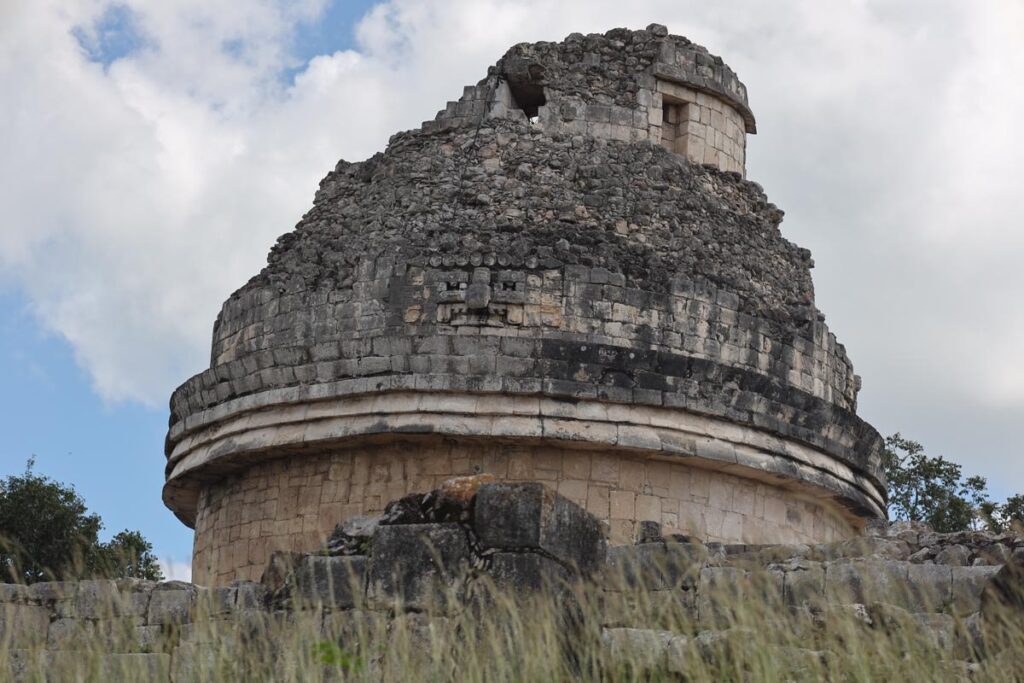
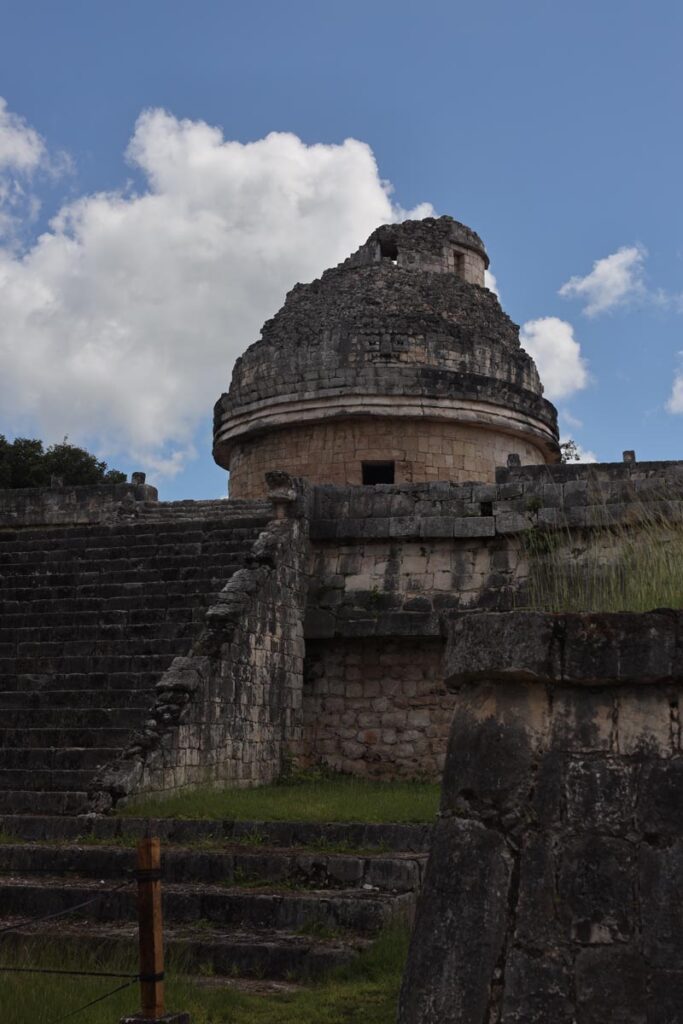
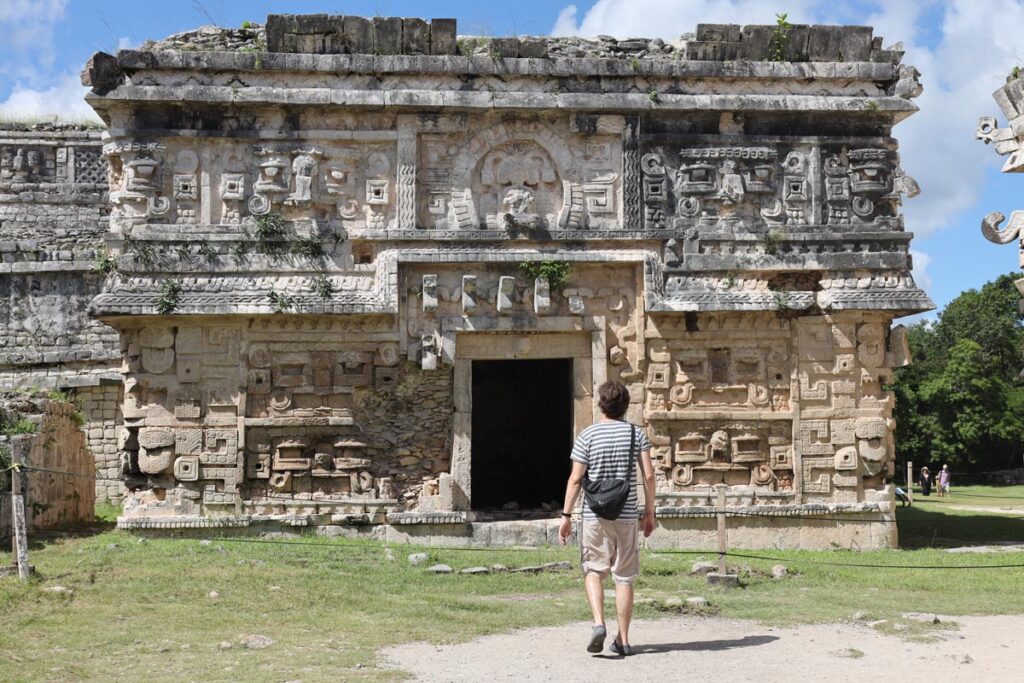
Take a seat on a bench in the shade of one of the occasional trees, enjoy the silence and admire the views of the structures such as “El Caracol” (The Observatory) or “Edificio de Monjas” (The Nunnery), which are classified as the oldest parts of Chichén Itzá.
Most visitors spend much of their time at the Castillo as it is the icon of the archaeological site. However, the Observatory is one of the most interesting and important structures in Chichén Itzá.
The building served astrological and calendrical purposes. For example, the windows of the observatory’s dome are aligned with the appearance of certain stars on specific dates, and it is believed that priests aligned rituals, celebrations, planting, and harvesting with the stars.
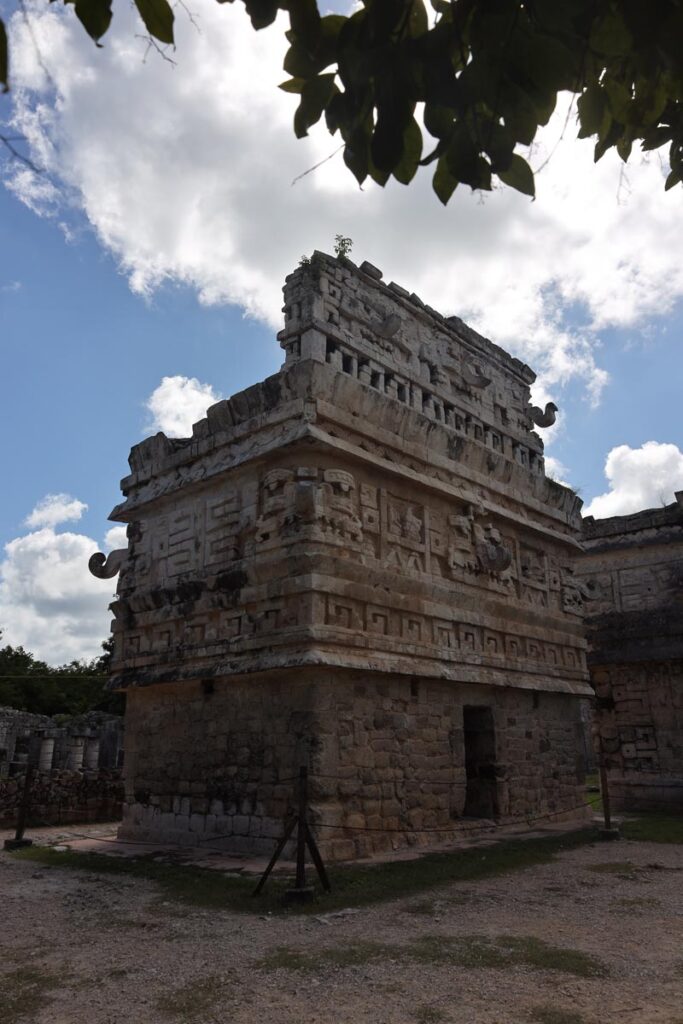
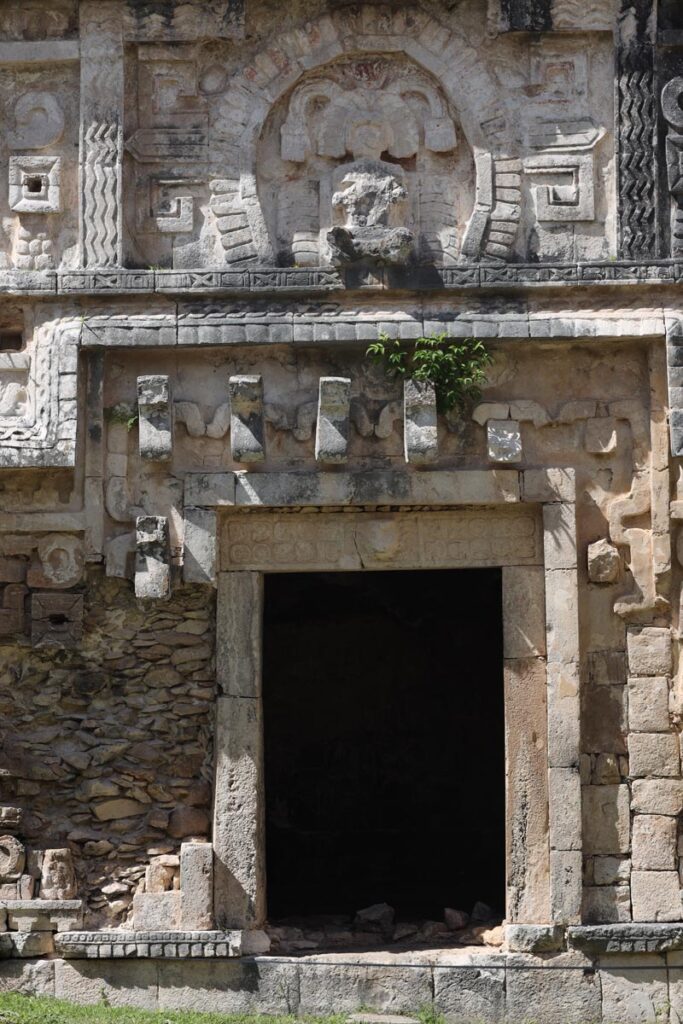
In my personal opinion, one of the most impressive structures is the so-called “Iglesia,” which can be found next to the Nunnery. This small rectangular building is almost completely covered in carvings.
Cenote Sagrado
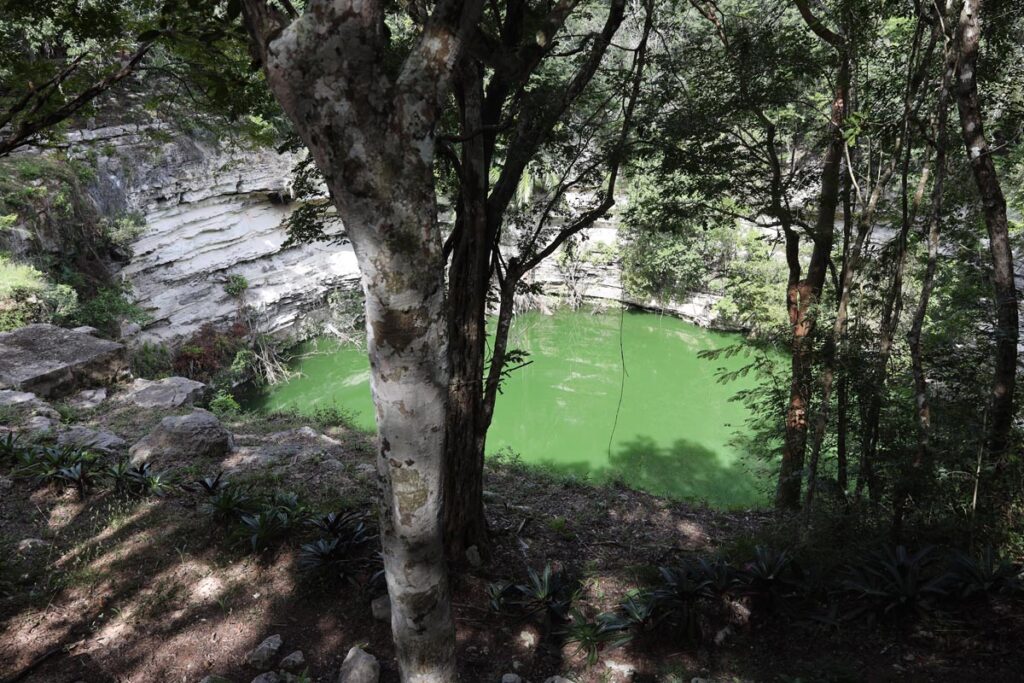
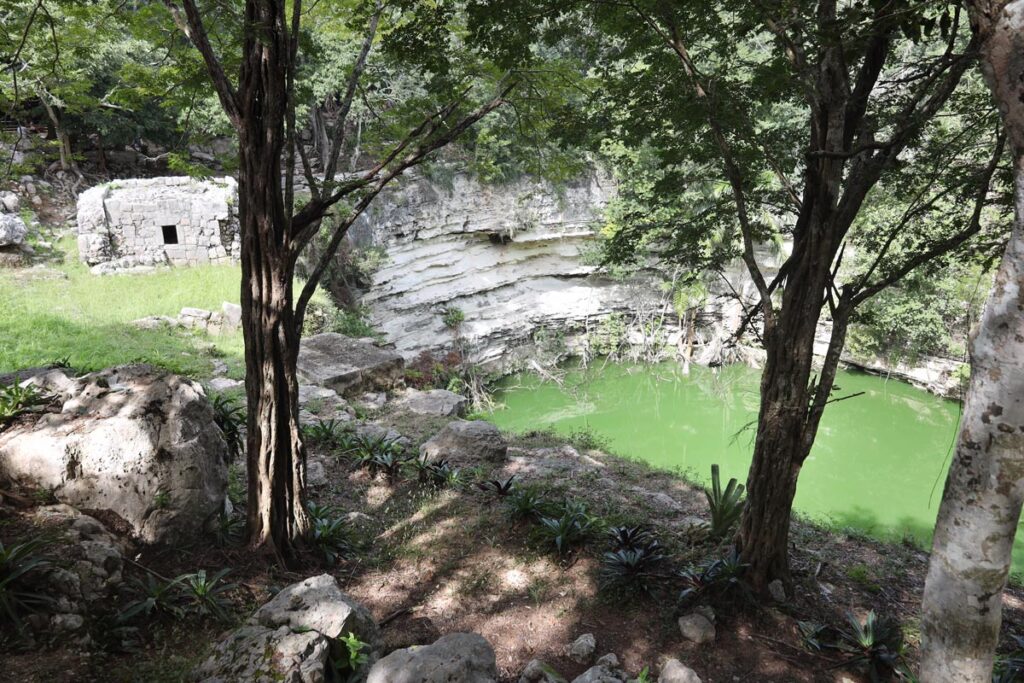
In addition to the ruins, there are two cenotes located at the site: the Cenote Sagrado and the Cenote Xtoloc. We only visited the Cenote Sagrado, as many tourists do. Next to the Cenote Sagrado, you will also find one of the two locations that offer cold drinks and some basic snacks such as chips.
In recent years, some adventurous expert divers ventured into the Cenote to find out what is hidden inside. The visibility underwater was extremely poor, and it was probably not the dive of a lifetime. However, they discovered that there are no hidden treasures inside, only some human remains.
Cenote Ik Kil
About three kilometers south of Chichen Itza, you will find another popular spot to visit – the Cenote Ik Kil. This Cenote is one of the most famous and highly visited in the Yucatan peninsula. It is located in a 17-meter deep hole, surrounded by long green vines and tree roots reaching down towards the water. To reach the waterhole, visitors can descend a narrow staircase. Despite the crowds, swimming in the Cenote is a unique and memorable experience.
Facilities including changing rooms and restrooms are available for visitors. Adjacent to the Cenote is a restaurant where you can grab some lunch after your swim.
Cenotes are one of the most popular natural attractions on the Yucatan peninsula, and they are home to some of the most unique, spectacular, and magical sights in the world. They are circular limestone holes that are filled with fresh water, and often have caves beneath the surface.
There are several types of Cenotes, including open, semi-open, cave, and closed Cenotes. These caves are often part of an underwater network of streams and caves, which is referred to as the “Mayan River” and runs throughout the Yucatan peninsula.
The Maya considered these Cenotes to be sacred and used them as a source of fresh water, but they were also used as sacrificial sites.
How to plan your trip to Chichen Itza
To avoid the crowds and heat, it’s best to arrive early. The starting points for a day trip to Chichen Itza are Mérida (2 hours away) and Valladolid (45 minutes away). Tours can also be booked from Cancún (2.5 hours away).
The Yucatan peninsula has a good network of buses, and ADO buses run regularly from Cancún to Chichen Itza and Mérida. The bus journey from Cancún to Chichen Itza takes about 3 hours and costs around 150 Pesos (8€).
If you arrive via ADO bus, you can store your luggage in lockers at the entrance.
Plan to spend about 4 hours exploring the entire site of Chichen Itza (5 hours if you want to include a swim at the Cenote Ik Kil).
There’s a light show called Kukulkan Nights, which starts at 7 p.m. in autumn and winter, and 8 p.m. during spring and summer. To purchase tickets, you need to go through an official tour operator and book in advance.